6th Nov 2027 - 21st Nov 2027
16 days/Nepal /Challenging to Extreme
Follow in the footsteps of legendary mountaineers and raise vital funds for your chosen charity on this epic Himalayan adventure. This 16-day challenge takes you deep into Nepal’s Khumbu region, the heart of Sherpa country, surrounded by the world’s highest peaks.
From the vibrant streets of Kathmandu, journey through mountain villages, cross dramatic suspension bridges, and pass ancient monasteries, all while acclimatising for the days ahead. Enjoy unforgettable panoramas of Ama Dablam, Lhotse, and Everest itself as you trek towards your goal.
Highlights include reaching the iconic Everest Base Camp, watching the sunrise from Kala Pattar, and sharing stories over apple pie in Namche Bazaar.
Push your limits, stand at the foot of the world’s highest mountain, and change lives through your fundraising.
Find out more about Charity Challenges
A Challenging to Extreme Trek. This is a tough 12-day trek to Nepal’s Everest Base Camp, including an optional (but highly recommended) summit of Kala Pattar. You will be trekking for 12 consecutive days over rough terrain, you will be exposed to higher altitudes each day, (average 4000m and up to a maximum of 5554m) and you will stay overnight in basic tea houses. Each day’s trek is between 5 and 8 hours (variable depending on group pace) and you will cover approximately 10-15km per day.
Everest Base Camp (EBC) is one of the world’s most iconic trekking destinations, drawing adventurers from across the globe. Located in Nepal’s Khumbu region at an altitude of 5,364 metres, it offers breathtaking views of the Himalayas, including the towering Mount Everest itself. The journey to EBC typically begins with a flight to Lukla, followed by a multi-day trek through picturesque Sherpa villages, rhododendron forests, and dramatic mountain landscapes. Along the way, trekkers experience the rich culture and traditions of the Sherpa people, visit ancient monasteries, and acclimatise gradually to the high altitude.
While reaching EBC does not require technical climbing skills, it is a challenging adventure demanding good physical fitness, determination, and preparation. The reward is standing at the foot of the world’s highest peak, surrounded by awe-inspiring scenery, a true bucket-list experience that leaves trekkers with unforgettable memories and a deep respect for the mountains.
You will be accompanied throughout the trek by English-speaking local Sherpa guides who have an excellent knowledge of hiking in the region and may have even summited Everest itself. The guides are first aid trained and will support you throughout your journey, sharing their experience and wisdom with you. You will also be supported by a team of assistant guides and a Different Travel UK tour manager. Your luggage is carried by a team of local porters.
The terrain will vary throughout the 12 days but in general you will trek up and down hills constantly throughout the day as the terrain is relentlessly undulating. Some days you may have a full day trekking uphill, followed by the next day trekking downhill all day. It is essential that your training includes plenty of hill walking and trekking up gradients over consecutive days in order to condition your muscles to this type of exertion. Underfoot the conditions will be dry, rocky and very dusty (bring a ‘Buff’ www.buffwear.co.uk to cover your face to prevent ‘Khumbu cough’). There are numerous river crossings which utilise very high suspension bridges.
November is one of the best times to trek in the Everest region and generally offers dry days with clear skies to enjoy incredible views of the mountains. Daytime temperatures can reach 20°C during the first few days, dropping to 0°C at night, then daytime temperatures drop to 5-15°C as you progress, with sub-zero night time temperatures (-10°C or lower). It tends to get dark at around 6pm.
Please note: the conditions above are historically accurate but climate change can lead to uncharacteristic conditions which are out of our control. The guides will assess the situation and make decisions to ensure the best enjoyment and safety of the group
During the trek the food is plentiful and delicious although the teahouses tend to offer similar menus so be prepared for a menu which is repeated. Generally you will be met with variations of rice, potato and noodle dishes, and soups. A typical breakfast will include a choice between eggs, omelette, toast, cereal, porridge. Lunch will typically include: dal bhat (steamed rice with a lentil soup), pasta, noodles, vegetables, rice, soup, momos (dumplings), whilst a typical dinner will include soup, dal bhat, vegetables, pasta, noodles, rice, potato dishes. There will also be plenty of snacks and drinks available to purchase at each tea house (prices vary) or at local cafés and bakeries (particularly in Namche). In tourist areas of Kathmandu you will find a wide range of restaurants catering for international and high-quality Nepalese food.
You will spend your first night in a hotel in Manthali and your final night in a hotel in Kathmandu, both with en-suite facilities. During the trek, accommodation will be in locally owned tea houses (basic mountain lodges) with shared bathroom facilities. While simple, the tea houses are comfortable and have a warm, welcoming atmosphere. Each features a communal lounge-dining area, heated by a central yak-dung stove, creating a cosy space to relax. This is where you’ll enjoy your breakfast and evening meals, and likely spend your evenings playing cards and getting to know your fellow trekkers.
Many tea houses offer battery charging, as well as soft drinks, hot drinks, snacks, and souvenirs for purchase. Bedrooms typically accommodate two or three people in single beds with mattresses, and sometimes pillows and blankets. You will need to bring your own sleeping bag.
The hotels have en-suite facilities with flushing toilets and hot showers. The shower and toilet facilities at the tea houses during the trek will vary. Most now have gas-powered hot water showers, payable locally (approx. 400-750 rupees). Showers become increasingly expensive the closer you get to base camp. Toilet facilities are basic. In the early stages of the trail there will be Western and Asian squat toilets which flush. Further along the trail there are fewer flushing toilets and instead large water vats with buckets are provided for flushing. Toilet paper should always be placed in the bin, not flushed. If you need to use the toilet during the trek day you must find a private area off the trail. You must never leave used toilet paper on the ground; this must be packed up into a nappy bag or sanitary disposal bag, pop it in your daypack and dispose of it properly at the tea house (please bring your own nappy sacks with you). You should bring one to two rolls of toilet paper for your own use but more can be purchased along the way if you run out. You are advised to bring a small pack of baby wipes and use natural or biodegradable soap/shampoo. You will need to bring your own towel. A highly absorbent but lightweight and fast drying trek towel is recommended.
An ideal candidate for the trek would be someone who enjoys trekking and being out of their comfort zone, is interested in different cultures and is willing to train for the challenge. The minimum age is 18, although 16-17 year olds may register if accompanied by a parent or legal guardian.
You are strongly advised to train to a good fitness level before departure to ensure fast recovery from each day’s walk. The distances covered may not be great but you must be prepared for, and be capable of, trekking for many hours a day on steep, rough terrain while carrying a daypack of around 6-8kg in weight. If you attempt to complete the trek without training, it will be unnecessarily challenging and will hinder your experience, and the experience of your teammates.
This trek is graded challenging to extreme because you will be trekking for 12 consecutive days over rough terrain, you will be exposed to higher altitudes each day, (average 4000m and up to a maximum of 5554m) and you will stay overnight in basic tea houses. Each day’s trek is between 5 and 8 hours (variable depending on group pace) and you will cover approximately 10-15km per day. The trek is an endurance challenge so you are strongly advised to build up to a good fitness level before departure to ensure fast recovery from each day’s exertion. Do not underestimate the training required for this trip. Being away from home comforts and family for an extended period of time is often a challenge for participants although access to communications on the trail is very good overall.
Any day-to-day items that you do not need to carry yourself, such as spare clothing, toiletries, or sleeping gear, will be transported in a separate bag to your next accommodation or campsite by porters and horses/yaks, so they are ready and waiting for you at the end of each day’s trek.
During the trek, you will only need to carry a small daypack containing essential items for that day, such as water, snacks, a basic first aid kit, sun protection, and any personal items you may need.
London – Kathmandu
Depart London for Kathmandu on an overnight flight.
Kathmandu – Manathali
Arrive in Kathmandu and transfer to our hotel in Manthali. We will have a trek briefing and welcome dinner this evening.
Manthali – Lukla (2843m) – Monjo (2835m)
Depart the hotel early this morning for the local airport, from where you will take a scenic 40-minute flight landing on a steep mountain runway, which sets the scene for our forthcoming trek. Upon arrival in Lukla, we will meet our assistant guides and porters before starting the trek up the Dudh Koshi Valley on a well-marked trail towards Phakding, where we cross and re-cross the river on a series of high suspension bridges before arriving in the small village of Monjo, where we stay overnight.
Meals: Boxed breakfast, lunch, dinner
Trekking: Approx. 5-6 hours / 12.5km
Monjo – Namche (3445m)
From Monjo we take a steep hike to Namche where, if the weather is clear, we catch our first glimpse of Mt Everest. Just beyond Monjo is the entrance to the Sagarmatha National Park, a protected area which aims to preserve the fragile mountain environment for future generations of trekkers and mountaineers. Namche is the main trading village in the Khumbu and has a busy market, numerous shops, cafes and most famously, freshly baked apple pies.
Meals: Breakfast, lunch, dinner
Trekking: Approx. 3-4 hours / 5km
Namche (acclimatisation day)
This morning, you will go on an important acclimatisation trek. There are several options for acclimatisation in the area, such as trekking towards the Everest View hotel (3880m), where with views of Ama Dablam, Lhotse, Thamserku and more; or perhaps visit the interesting Sherpa museum and Syangboche airport (3780m) where you may catch a glimpse of Everest. After lunch, the rest of the day is free for you to relax and enjoy the bustling town of Namche (and perhaps try a slice of famous apple pie).
Meals: Breakfast, lunch, dinner
Trekking: Approx. 2-3 hours / 3km
Namche – Deboche (3820m)
From Namche, the trail contours onto the side of the valley, high above the Dudh Kosi river, where we enjoy our first really good views of the great peaks of the Khumbu. Passing several villages and numerous tea shops, we descend steeply into the forest towards the village of Phunki Tenga situated next to the river, where we stop for lunch. After lunch, we take a steep climb out of the forest to Tengboche, which is famous for its monastery, the largest in the Khumbu. We then descend to a village nearby, Deboche, where we stay overnight.
Meals: Breakfast, lunch, dinner
Trekking: Approx. 6-7 hours / 12km
Deboche – Dingboche (4410m)
This morning, we continue to descend through the forest until we cross the river and start our steady ascent up towards the village of Dingboche, stopping at a village for lunch. The trail this afternoon opens up into what feels like a vast plain after following a narrow trail earlier in the day. You will notice the temperature dropping as you approach Dingboche, which is the highest altitude village on the trek so far.
Meals: Breakfast, lunch, dinner
Trekking: Approx. 4-5 hours / 9.5km
Dingboche (acclimatisation day)
Today is another important day for acclimatisation. You will ascend to around 4600m, from where you will have panoramic views of the nearby peaks and the rural farmland in the valley below. Look out for Ama Dablam, Amphu Gyabjen, Cholatse and Tabuche, which surround vast glaciers and turquoise lakes. This afternoon, you can explore the village and perhaps visit one of the bakeries or cafes for refreshment.
Meals: Breakfast, lunch, dinner
Trekking: Approx. 2-3 hours / 3km
Dingboche – Lobuche (4910m)
We retrace our steps from yesterday’s acclimatisation up the wide valley beneath the impressive peaks of Cholatse and Tabuchebut turn right and take a steep ascent towards the foot of the Khumbu Glacier. We stop to have lunch at Thukla (4620m), a small village surrounded by vast peaks, before continuing on the trail towards the memorial, home to tributes to all those who have died in Nepal’s Himalaya. After some time to reflect, we continue following the Khumbu glacier up towards the cluster of houses at Lobuche, where we stay for the night.
Meals: Breakfast, lunch, dinner
Trekking: Approx. 5-6 hours / 9km
Lobuche – Everest Base Camp (5364m) – Gorak Shep (5140m)
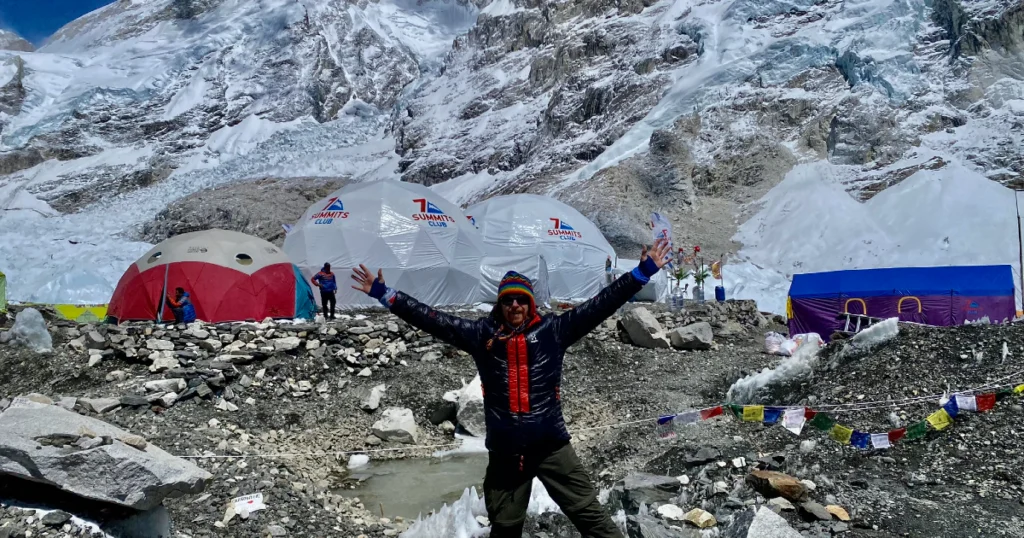
Today we make our final journey to our goal, Everest Base Camp. Starting our trek just after dawn we continue to follow the ice pinnacles and crevasses of the Khumbu Glacier as it winds its way through the valley. After around 4 hours trekking we stop for an early lunch at Gorak Shep before making the final push to reach Base Camp, arriving a few hours later. After celebrations, group photographs and time to appreciate the stunning surroundings at Base Camp we return to Gorak Shep for a well-deserved rest!
Meals: Breakfast, lunch, dinner
Trekking: Approx. 8-9 hours / 11.5km
Gorak Shep – Kala Pattar (5554m) – Pheriche (4240m)Â
The trek to the top of Kala Pattar is optional, but it offers superb sunrise views of Everest (which you can’t see from Base Camp) and other vast peaks. If you wish to do this trek, a 3 am start is required to make it to the top for sunrise. For those trekking Kala Pattar, you will return to Gorak Shep in time to meet the rest of the team for breakfast before starting the descent to Pheriche, a small town you will have seen from across the valley in Dingboche when we stayed there on days 7 and 8.
Meals: Breakfast, lunch, dinner
Trekking: Approx. 5-6 hours / 12km (+ extra 4 hours + 2km for Kala Pattar)
Pheriche – Kyangjuma (3550m)
Today’s trek is mostly downhill as we retrace our steps and descend to Kyangjuma, a village just outside of Namche. There are lots of places of interest along the way, including a trekker’s health post, water-driven prayer wheels and rhododendron forests.
Meals: Breakfast, lunch, dinner
Trekking: Approx. 8 hours / 14.5km
Kyangjuma – Monjo (2840m)
Today, we continue on the trail to Namche and Monjo. We can take a small detour this morning to visit Khumjung (3780m) and Khunde (3840m), where you can visit the Edmund Hillary School and hospital, both still in use today, or the Monastery. We descend into Namche for lunch before making our way back to Monjo for the night.
Meals: Breakfast, lunch, dinner
Trekking: Approx. 4-5 hours / 8km
Monjo – Lukla (2843m)Â
Today marks our final day of trekking as we follow the Dudh Kosi back to Lukla. The rest of the afternoon is at leisure, and you may wish to visit one of the many bars, cafes and restaurants, or simply relax and reflect on your incredible achievement. Tonight, you will enjoy a celebratory meal together and have a thank-you and tip ceremony for the local guides and porters.
Meals: Breakfast, lunch, dinner
Trekking: Approx. 7-8 hours / 12.5km
Lukla – Kathmandu
This morning we will depart Lukla on the earliest flight back to Manthali, from where it is a drive of around 5 hours back to Kathmandu.. We will arrive at the hotel and enjoy the rest of the day at leisure. This evening we will enjoy a farewell meal in Kathmandu. Overnight at a Kathmandu hotel.
Meals: Breakfast, lunch, dinner
Kathmandu – London
Transfer to the airport for the return flight to London. You may arrive on Monday 22 November, depending on flight schedules.
N.B.This itinerary is subject to change and will depend on the group’s ability, flight schedules, weather and the daily circumstances. Any changes in the itinerary will be made in the interest of group safety and enjoyment. You will be informed each evening of the plans for the next day. Your guide and tour manager will have the final say in the interest of the health and safety of the group.
Non-refundable registration fee: £545 (this can be paid in instalments by emailing accounts@different-travel.com)
and then either…
Self-funded: £2,995
or
Sponsorship: £5,990
orÂ
Flexi: £2,995 trip costs and £2,995 sponsorship for a charity* of your choice
This option is for those who choose to pay the trip costs (flights, accommodation, food, guides, etc.) themselves. There is no sponsorship required, although if you wish to raise sponsorship for a charity, you are welcome to do so.
This option is for those who wish to raise sponsorship to cover both the costs of the trip (flights, accommodation, food, guides, etc.) and a donation to their chosen charity. There is a minimum sponsorship amount for each trip that you are required to raise to participate.
This option is for those who choose to pay the trip costs (flights, accommodation, food, guides, etc.) themselves while still raising some funds for the charity.
*If your chosen charity is not on this list, please seek permission to fundraise for them by taking part in this challenge before making your booking.
If you’ve a question about this challenge that you can’t find the answer to within the given information then complete this quick form and we’ll get back to you as soon as possible.