20th Feb 2027 - 28th Feb 2027
9 days/Kenya /Challenging to Extreme
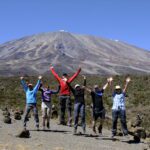
Join us for an unforgettable journey to the summit of Mount Kenya, Africa’s second-highest peak and one of the continent’s most spectacular trekking destinations. This exhilarating adventure takes you through lush forests, ancient caves, dramatic alpine landscapes and panoramic ridgelines, culminating in a sunrise ascent to Point Lenana at 4,985m.
Your challenge begins in the vibrant city of Nairobi, where you’ll have time to explore and meet your fellow trekkers before heading into the wild. From the tropical woodlands of Sirimon Gate to the rugged beauty of Shiptons Camp, each step of the route is designed to gradually acclimatise your body while immersing you in Kenya’s breathtaking natural beauty. A dedicated acclimatisation day at altitude boosts your chances of summit success and ensures a safer, more enjoyable climb.
After reaching the summit, take in unforgettable views stretching to Kilimanjaro on a clear day before descending to the comfort of lower altitudes. The adventure concludes with a chance to relax in Nanyuki and enjoy a celebratory meal before returning home with incredible memories and a real sense of achievement.
Whether you’re a seasoned trekker or tackling your first high-altitude climb, Mount Kenya promises an extraordinary experience.
This Mount Kenya Summit trek is graded as challenging to extreme, due to the route demanding a high level of physical fitness, mental resilience, and a willingness to push beyond your comfort zone. You’ll face long days on foot, steep ascents, rocky terrain, and high-altitude conditions that test even seasoned trekkers. The early morning summit attempt to Point Lenana (4,985m) involves trekking in darkness and cold temperatures, but the reward, sunrise views across the African plains to Kilimanjaro, is well worth the effort. With careful acclimatisation, expert guides, and strong group support, you’ll be set up for success, but this is a true mountain challenge that will stretch your limits and leave you with an incredible sense of achievement.
Mount Kenya is Africa’s second-highest mountain, rising to 5,199 metres at its highest peak, Batian. A UNESCO World Heritage Site, the National Park and forest is known for its dramatic landscapes, diverse ecosystems, and glacial peaks. While technical climbs are required to reach Batian and Nelion, the third peak, Point Lenana at 4,985m, is accessible via a demanding high-altitude trek. The mountain’s slopes are home to lush forests, unique wildlife, and Afro-alpine vegetation, offering a rich and varied trekking experience. Less crowded than Kilimanjaro, Mount Kenya is ideal for those seeking adventure, natural beauty, and the challenge of reaching a true African summit.
You will be accompanied throughout the trek by English-speaking local guides who have an excellent knowledge of hiking in the region and may have even summited via Batian or Nelion. The guides are first aid trained and will support you throughout your journey, sharing their experience and wisdom with you. You will also be supported by a team of assistant guides and a Different Travel UK tour manager. Your luggage is carried by a team of local porters.
The terrain on Mount Kenya is diverse and challenging, changing dramatically as you gain altitude. The trek begins on the lower slopes through dense tropical montane forest, where trails wind through bamboo groves and hardwood trees, often muddy and uneven underfoot. As you ascend, the forest transitions into open moorland and heath, where grassy ridges and rocky paths are dotted with giant groundsels and lobelias. Higher up, the landscape becomes increasingly rugged, with exposed trails, rocky scree, and glacial features. The air thins noticeably above 4,000m, and the environment becomes colder and more barren. The final summit push to Point Lenana is steep and often tackled in darkness, with the possibility of ice or snow underfoot. It’s a physically demanding climb that requires stamina, sure footing, and determination, but the breathtaking scenery and sense of achievement make every step worthwhile.
Mount Kenya’s climate varies greatly with altitude and time of year, offering everything from warm sunshine to freezing alpine conditions. On the lower slopes, the weather is generally mild and humid, with occasional rain, especially in forested areas. As you climb higher, the air becomes cooler and drier, with daytime temperatures dropping significantly. Above 3,000 metres, nights can be very cold, often falling below freezing, even when days are sunny. At higher altitudes, particularly above 4,000 metres, the climate is harsh and unpredictable, temperatures can plummet, and frost, wind, or even snowfall are possible, especially during the early morning summit attempt.
Meals are provided as specified in the itinerary and during the trek are cooked by your own chef who will prepare hearty Kenyan and Western meals. A dining tent with plates, mugs and cutlery is provided.
Typical meals during the trek include:
Breakfast: porridge, fresh fruit, toast, sausages, eggs, omelette, pancakes etc.
Lunch: Sandwiches, salad, cake, a carton of juice, fresh fruit. Snacks: Popcorn, biscuits and nuts
Dinner: Soup and bread, salad, coleslaw, potatoes, vegetables, pasta, rice, meat or vegetable stew, fish, eggs etc.
You will stay in a hotel in Nairobi before the trek and at a comfortable lodge in Nanyuki after the trek. During the trek, you will stay in basic mountain huts. Accommodation in the hotels/lodge is on a twin-share basis, and in the mountain huts, you will be in basic mixed dormitory-style rooms. You will need to bring your own sleeping bag and sleeping mat.
At the hotels, there will be showers and flushing toilets. During the trek, there are no showers, so please bring a pack of biodegradable baby wipes to maintain your personal hygiene. At the campsites during the trek, the toilets will be African long drop style (a hole in the ground covered by a wooden hut for privacy) and will vary in terms of cleanliness and quality. Toilet paper is not provided, so you will need to bring your own (2 rolls should suffice). If you need to use the toilet during the trek day, you will need to find a bush/rock as there are virtually no toilet facilities along the trails (you usually only find toilets at the camps). Never leave toilet paper on the ground; you must put it in a biodegradable bag (plastic bags are banned in Kenya) and dispose of it at camp. NEVER leave toilet paper or other litter on the trail.
An ideal candidate for the trek would be someone who enjoys trekking and being out of their comfort zone, is interested in different cultures and is willing to train for the challenge. The minimum age is 18, although 16-17 year olds may register if accompanied by a parent or legal guardian.
To take on the Mount Kenya trek, you need to be in good physical condition with a reasonable level of endurance and stamina. The trek involves multiple days of walking for 6–8 hours over uneven, often steep terrain, and includes a summit day that can last 10–12 hours at high altitude. While no technical climbing skills are needed for Point Lenana, the effects of altitude, cold temperatures, and physical exertion make this a challenging to extreme adventure.
Regular cardiovascular training, such as hiking, running, or cycling, combined with leg-strengthening exercises and long walks on varied terrain, is highly recommended in the months leading up to the trip. Mental resilience is just as important as physical fitness, especially during the tougher days and early morning summit push.
If you’re generally active and committed to preparing in advance, you’ll be well-positioned to enjoy the challenge and reach the summit successfully.
The Mount Kenya trek is tough and physically demanding, especially due to its high altitude and varied terrain. While reaching Point Lenana (4,985m) doesn’t require technical climbing skills, it does involve long days of trekking, often 6 to 8 hours, and a strenuous summit day that can last 10 to 12 hours. The trails range from muddy forest paths to steep alpine scree and rocky ridges, with cold temperatures and thinning air adding to the challenge as you ascend.
Altitude is one of the toughest aspects of the trek; symptoms like headaches, fatigue, and shortness of breath are common, even for fit individuals. A planned acclimatisation day helps improve your chances of a successful summit, but this is still a challenging to extreme trek that will push you physically and mentally.
That said, with the right preparation, support from experienced guides, and a determined mindset, the trek is entirely achievable and incredibly rewarding. The views from the top, especially at sunrise, and the sense of accomplishment make the effort more than worth it.
Any luggage that is not needed during the trek can be safely stored at the hotel for the duration of the trip. This allows you to carry only the essentials while trekking, with the peace of mind that your remaining belongings are secure and will be waiting for you upon your return.
Any day-to-day items that you do not need to carry yourself, such as spare clothing, toiletries, or sleeping gear, will be transported in a separate bag to your next accommodation or campsite by porters so they are ready and waiting for you at the end of each day’s trek.
During the trek, you will only need to carry a small daypack containing essential items for that day, such as water, snacks, a basic first aid kit, sun protection, and any personal items you may need.
UK – Nairobi
Depart the UK for Nairobi. On arrival, transfer to your hotel for dinner and overnight.
Meals: dinner
Nairobi
You can then enjoy a free day to explore Nairobi or relax at the hotel. This evening, we’ll have a trek briefing and a welcome dinner.
Meals: Breakfast, dinner
Nairobi – Camp Mahon Campsite
We set off early this morning, stopping en route for lunch, and will reach our campsite early this afternoon. There is time for a short acclimatisation walk to the Mau Mau Caves before dinner.
Meals: Breakfast, Lunch, Dinner
Camp Mahon – Old Moses (3,400m)
A short drive this morning brings us to the Sirimon Park Gate entrance (2,700m) from where we commence our trek through tropical woodlands to Old Moses Camp, where we stay overnight in mountain huts.
Meals: Breakfast, Lunch, Dinner
Old Moses – Shiptons Camp (4,200m)
After breakfast, we trek through the MacKinders Valley, enjoying spectacular views, for around 8 hours to reach Shipton’s Camp, where once again we will stay in mountain huts.
Meals: Breakfast, Lunch, Dinner
Shipton’s Camp
Today is an important acclimatisation day; this will give your body more time to prepare for the summit of Mount Kenya, and therefore a greater chance of success. We’ll do some local trekking and make sure we take plenty of rest.
Meals: Breakfast, Lunch, Dinner
Shipton’s Camp – Point Lenana (4,985m) – Met Station Camp
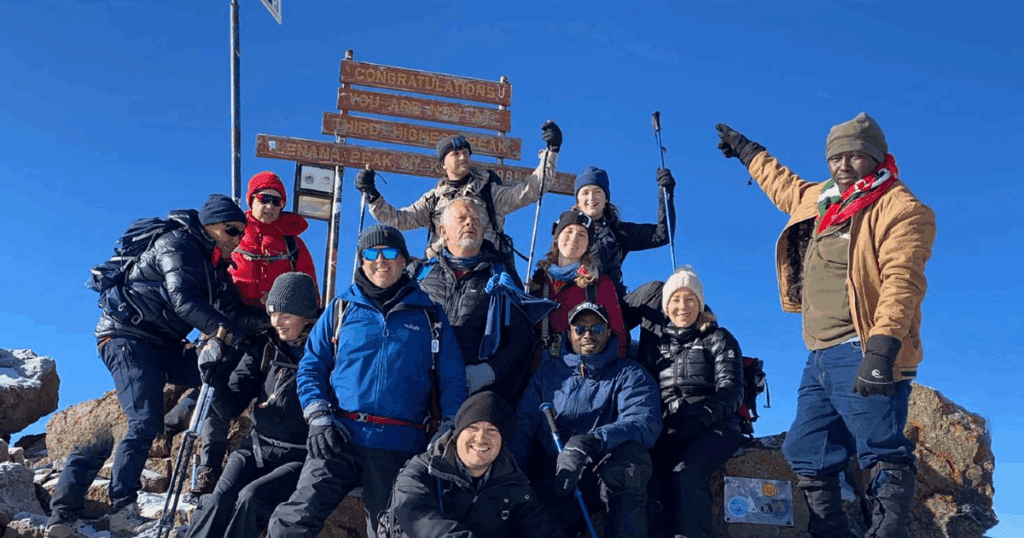
It’s a very early start with our eyes set on our goal of Point Lenana! Our efforts will be rewarded with stunning views across to Kilimanjaro in the south, as well as the amazing achievement of having summited Mount Kenya. Our descent brings us to the Meteorological Station, where we stay in mountain huts overnight.
Meals: Breakfast, Lunch, Dinner
Met Station Camp – Nanyuki
This morning, we continue our descent to the Naromoru Park Gate, where our vehicle awaits to take us to our hotel in Nanyuki.
Meals: Breakfast, Lunch, Dinner
Nanyuki – Nairobi – UK
Transfer to the airport for your overnight flight back to the UK, stopping for lunch en route.
Meals: Breakfast and lunch
Nanyuki to Samburu Game Reserve
We’ll depart from Nanyuki in the morning and drive northwards towards Samburu National Reserve (approx. 2.5 to 3 hrs drive). Arrive at the game reserve, enjoy lunch, followed by an afternoon game drive. Samburu is part of a lava plain that includes a diverse landscape of thorn scrub, red dirt, dried river beds, broken volcanic rock, steep hills, and rocky outcroppings. The region is home to the uncommon Grevy’s Zebra, Gerenuk Antelope, Somali Ostriches, Lions and Oryx, Elephant, Crocodile and numerous birds make excellent sightings.
Meals: breakfast, lunch & dinner
Buffalo Springs Game Reserve
Enjoy an early breakfast before we drive across to Buffalo Springs Game Reserve, which is separated from Samburu by the Ewaso Nyiro River. The river and its brown water (from which its name derives) dictate the landscape; when it flows, its wide banks are lined by swathes of green attracting an amazing variety of wildlife. By the sides of the river, the shady forest is home to Elephant, the Long-Necked Gerenuk, Reticulated Giraffe and the occasional Leopard. If you wish, enjoy a swim in the natural spring located in the park; a refreshing experience offering respite from the hot sun! We continue to our lodge and check in for dinner and overnight.
Meals: Breakfast, lunch & dinner
Buffalo Springs – Nairobi – UK
Enjoy breakfast at leisure before checking out and heading back towards Nanyuki, the Central highlands and finally Nairobi, arriving in the late afternoon (journey time approx. 7 hours). Check in for the flight back to London.
Meals: Breakfast & lunch
Total trip cost: £3,195
Optional Extension
Please contact us at accounts@different-travel.com for details on how to pay your deposit or trip costs by instalments.
If you’ve a question about this challenge that you can’t find the answer to within the given information then complete this quick form and we’ll get back to you as soon as possible.